

Why voicebots are harder to test than chatbots
With a chatbot, the text arrives exactly as the user types it. With a voicebot, the phone line, speech recognition and speech output sit in between. Any of these stages can break a conversation, even when the bot’s logic is correct:
- Speech recognition mishears names, numbers or dialect.
- The bot answers too late or talks over the caller.
- The caller’s pauses are read as the end of the conversation.
- Speech output reads numbers or abbreviations out in a way that is hard to understand.
A test that only hands the bot text sees none of these errors.
What a voicebot test should check
A good test case describes a request and the outcome that must be reached at the end. It checks the whole conversation, not individual answers.
| What to check | The question behind it |
|---|---|
| Goal reached | Did the caller get what they called for? |
| Required details | Did the bot ask for all the necessary data and understand it correctly? |
| Conversation flow | Were there loops, repetitions or dropped calls? |
| Closing | Does the call end with the right confirmation or handover? |
| Limits | Does the bot say clearly what it can’t do and hand over to a human? |
What good test cases for voicebots look like
Describe the caller and their request, not the wording of the conversation. An example:
Tim calls his insurance company because his sunglasses are broken. He knows his customer number and the value of the sunglasses. Expected: The bot asks for the customer number and the value and confirms at the end that an email is on its way.
Three rules help:
- One request per test case. That way it is clear what failed.
- Expect outcomes, not phrasings. “The bot confirms the appointment” is more robust than a fixed sentence.
- Plan for deviations. Have the caller correct themselves, hesitate or ask something unexpected.
Test a voicebot by phone: how it works with gentesty
- Create the voicebot. You enter the phone number your voicebot can be reached at. No technical integration is needed.
- Write the test scenario. You describe who is calling, what they want and what the outcome should be.
- Start the test run. gentesty calls the voicebot and holds the conversation like a caller.
- Read the result. You read the transcript, listen to the recording and see the evaluation.
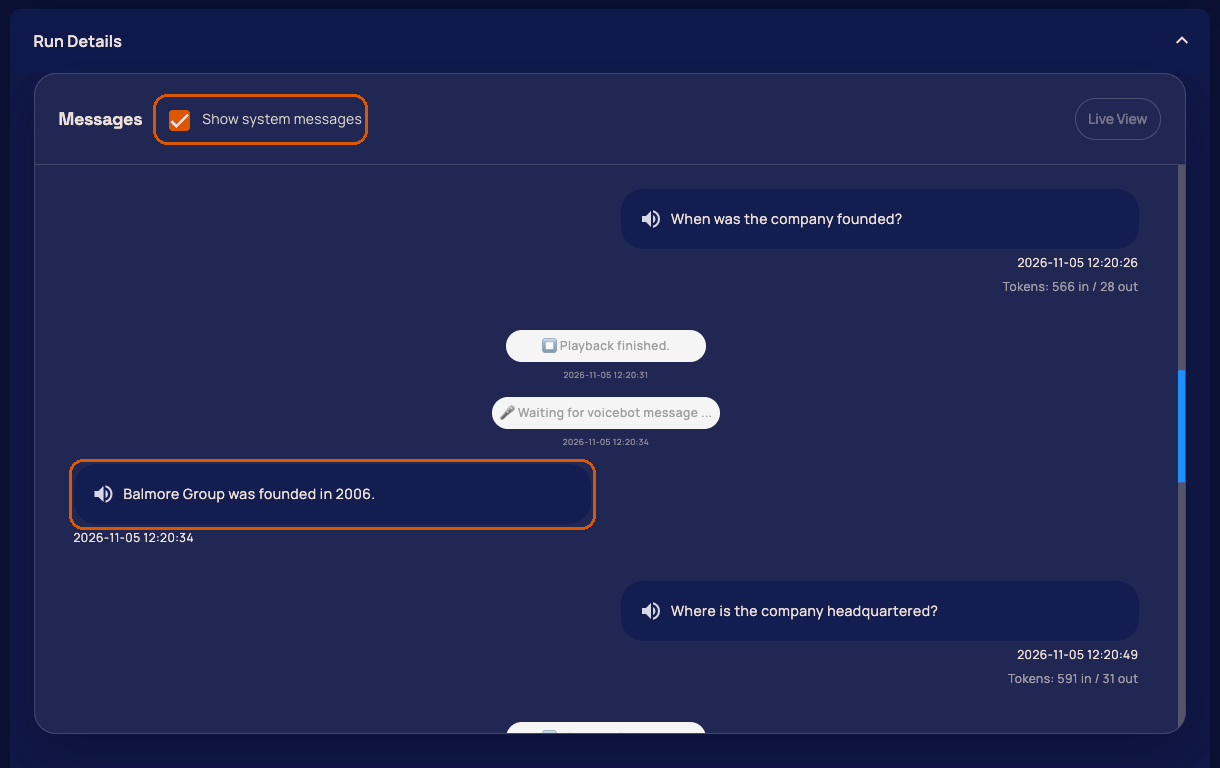
More on the voicebot testing page and in the step-by-step guide Testing voicebots by phone.
Frequently asked questions
How often should you test a voicebot?
Before go-live, before every release, and after every change to the prompt, language model, speech recognition or voice. With scheduled test runs, you can also check the bot regularly in production.
Is it enough to test the voicebot's logic with text?
No. A text test only checks the logic. Whether the bot understands names and numbers over the phone, answers in time and copes with pauses only shows up in a phone call.
How many test cases does a voicebot need?
As many as the bot has requests to handle, plus the most important deviations: the caller corrects themselves, gives an invalid answer or asks for something the bot can’t do. A dozen good cases is a solid start.